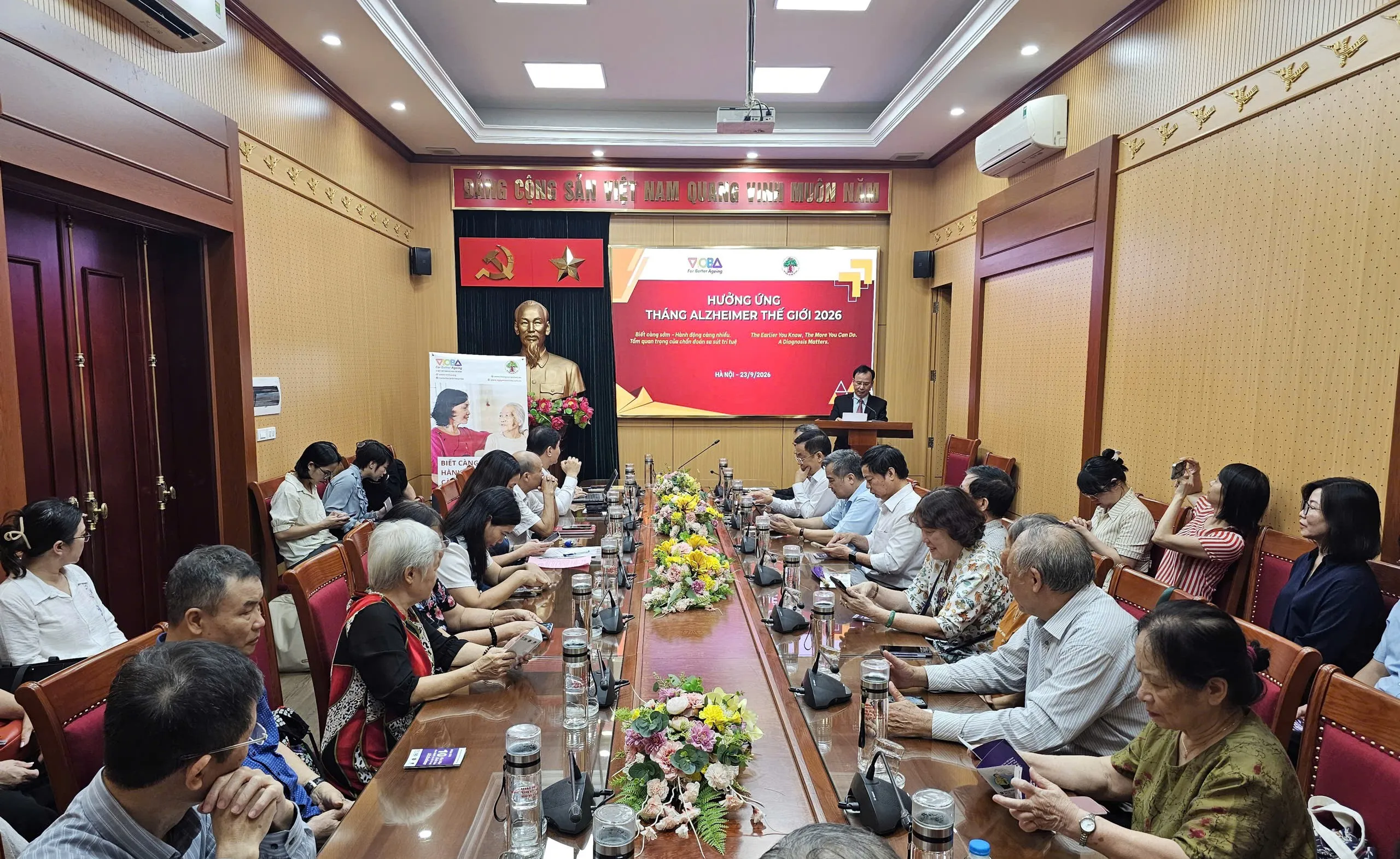
On the morning of September 23, 2026, in Hanoi, the Central Committee of the Vietnam Association of the Elderly (VAE), in partnership with VIOBA Social Enterprise, held an event to commemorate World Alzheimer’s Month (WAM) 2026under the theme: “The Earlier You Know, the More You Can Do: A Dementia Diagnosis Matters.”
The event was chaired by Mr. Nguyen Lam, Permanent Vice President of the VAE Central Committee. Attendees included leaders and representatives from the VAE; Dr. Vuong Anh Duong, Vice Director of the Department of Medical Service Administration (Ministry of Health); Assoc. Prof. Dr. Tran Viet Luc, Vice Director of the National Geriatric Hospital; representatives from the Department of Social Protection, Department of Disease Prevention, and the Health Strategy and Policy Institute (Ministry of Health); Ms. Tran Bich Thuy, Executive Director of VIOBA and Country Director of HelpAge International in Viet Nam; alongside representatives of older adults in Hanoi.

Dementia: An Escalating Challenge in an Ageing Society
Delegates highlighted that dementia is becoming an increasingly pressing public health issue amid rapid population ageing.
Globally, more than 55 million people live with dementia, a figure projected to surge to 139 million by 2050. Dementia is also forecasted to become the third leading cause of death worldwide by 2040. In Viet Nam, an estimated 530,000 people are living with dementia, and this number could reach approximately 1.75 million by 2050.
Crucially, more than half of individuals living with dementia in Viet Nam are estimated to remain officially undiagnosed. This reality underscores the urgent need to raise awareness, advance early detection, and expand equitable access to diagnosis, treatment, care, and psychosocial support.
Dementia is not a normal part of ageing. Recognizing early cognitive and behavioral changes, seeking timely medical consultations, and receiving an early diagnosis empower individuals and their families to understand the condition, proactively plan ahead, and access appropriate support networks.
From "Knowing Early" to "Acting Early"
Speaking at the event, Ms. Tran Bich Thuy, Executive Director of VIOBA and Country Director of HelpAge International in Viet Nam, emphasized that the 2026 World Alzheimer’s Month theme positions early diagnosis at its core — because a diagnosis is not merely about identifying the condition, but the essential first step in determining actionable next steps..

VIOBA put forward three key action messages:
First, proactively reducing dementia risk across the life course. International scientific evidence demonstrates that up to 45% of dementia cases can be prevented or delayed by addressing modifiable risk factors.
Second, strengthening early detection and diagnosis. A timely diagnosis enables individuals and families to understand their condition, access appropriate clinical and psychosocial care options, and secure vital time to plan for the future.
Third, developing a National Action Plan on Dementia for Viet Nam. A comprehensive national plan will establish an overarching framework to mobilize and coordinate resources, enhance public awareness, foster prevention and early detection, build diagnostic and healthcare capacity, support family caregivers, and expand community-based care networks.
From a clinical perspective, Dr. Nguyen Thanh Binh from the National Geriatric Hospital outlined common warning signs of dementia in everyday life and highlighted modifiable risk factors. She recommended that people maintain healthy lifestyles and undergo regular health check-ups to identify cognitive and functional changes early on.
These insights reinforce the core message of World Alzheimer's Month 2026: The earlier you know, the more you can do - from mitigating risk factors and identifying warning signs to proactively seeking professional support.
From Awareness to Policy Dialogue
Dr. Vuong Anh Duong, Vice Director of the Department of Medical Service Administration (Ministry of Health), affirmed the Ministry’s strong commitment to older adults' health care and dementia management. The Department is currently developing clinical guidelines for geriatrics, identifying dementia as a core geriatric syndrome requiring standardized care protocols.
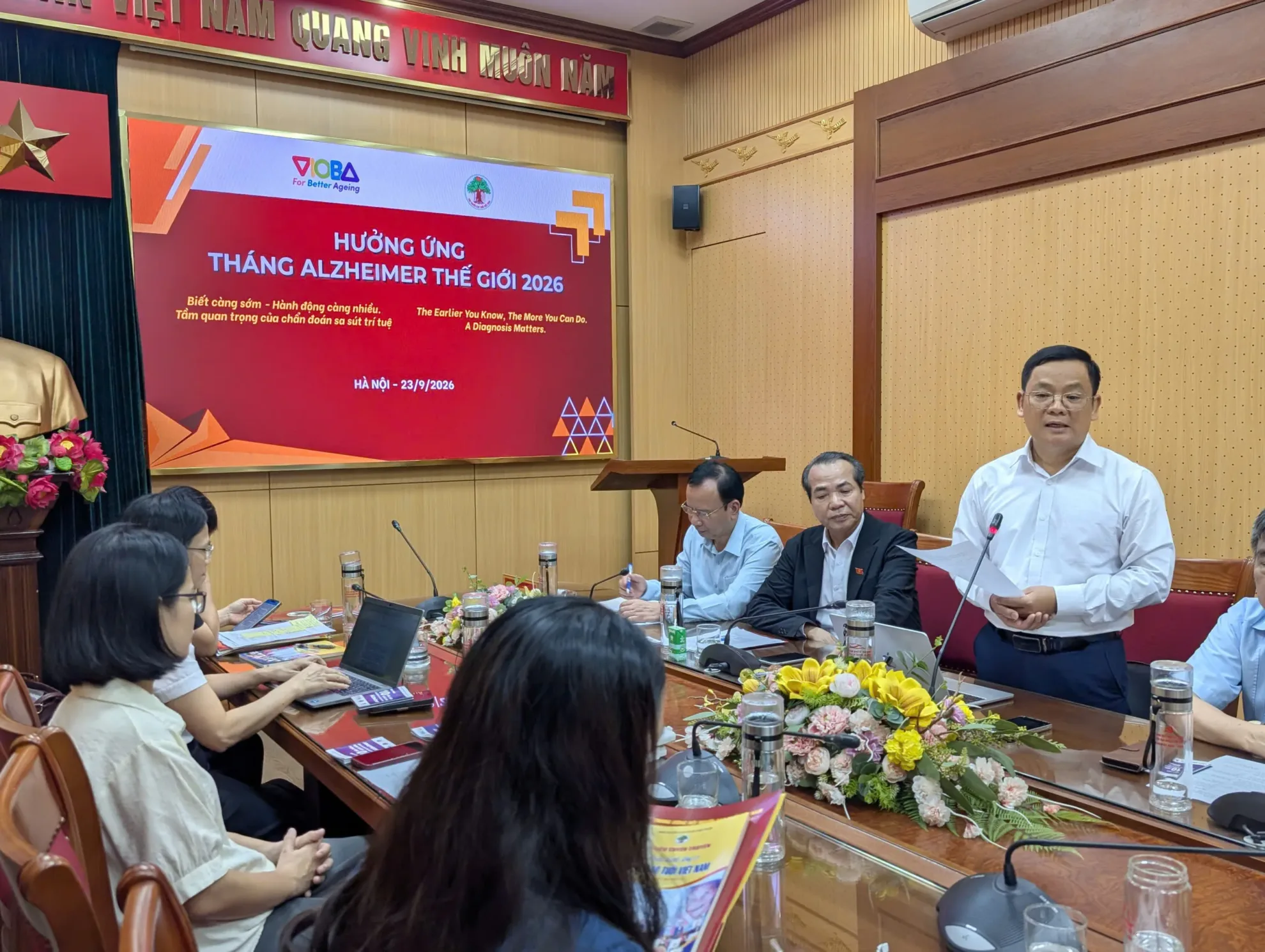
Dr. Duong also highlighted advances in early detection, including the implementation of blood biomarker tests at the National Geriatric Hospital, and noted policy directions to integrate comprehensive geriatric assessments into routine health examinations to detect functional decline early.
In response to the proposal by the VAE Central Committee and VIOBA regarding a National Action Plan on Dementia, Dr. Duong raised a central question for broader stakeholder discussion: Should Viet Nam establish a dedicated national action plan on dementia, or integrate dementia strategies into existing health and social protection programs and initiatives?
This question opens a vital policy discussion, demonstrating the need for ongoing consultation with the Association of the Elderly, governing bodies, healthcare specialists, and civil society organizations to determine the most effective roadmap for Viet Nam.
Joining Hands for an Active and Healthy Ageing Viet Nam
The World Alzheimer’s Month 2026 commemorative event provided an open forum for policymakers, civil society organizations, clinicians, and older persons to discuss current gaps across prevention, detection, diagnosis, treatment, and social care for people living with dementia.
Crucially, the event helped elevate dementia within national health and social policy dialogues amidst Viet Nam's accelerating population ageing, laying the groundwork for a cohesive national framework.
VIOBA Social Enterprise and the VAE Central Committee remain committed to working closely with the Ministry of Health, the National Geriatric Hospital, and relevant partners to advance awareness, prevention, early detection, and comprehensive care for people living with dementia and their families—striving toward an active, healthy ageing Viet Nam where no one is left behind.