
Healthcare achievements and declining fertility trends are shaping one of the most profound demographic transformations in history: global population ageing. It is time to stop viewing this situation purely as a social welfare issue. Instead, we must transform it into a driving force for innovating development models, unlocking human capital, and building a sustainable future.
A Turning Point in Demographic History
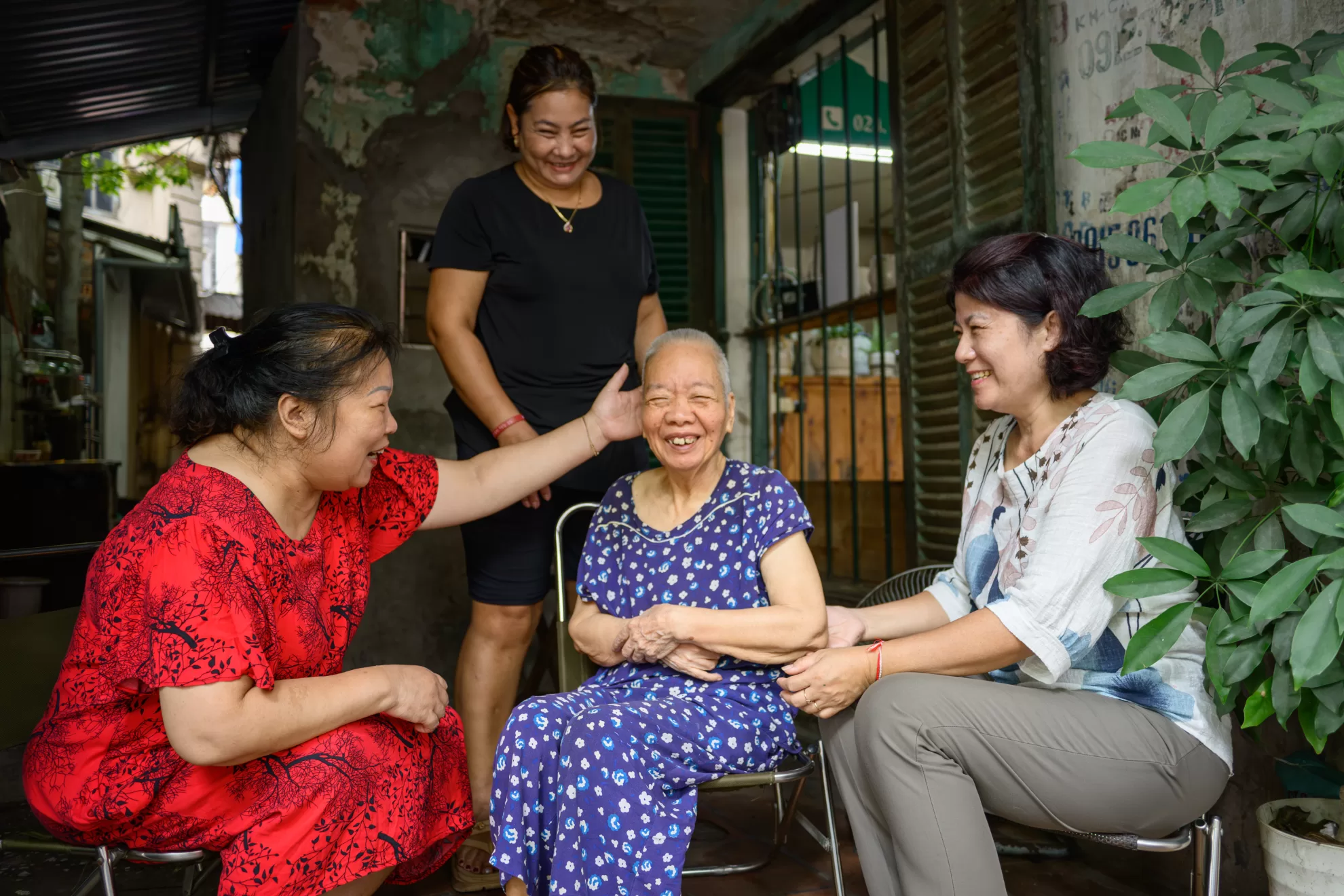
Population ageing is no longer a trend unique to developed countries; it has become a defining feature of the global demographic transition. According to the United Nations, in 2024, people aged 65 and older accounted for approximately 10% of the world's population; by 2050, this proportion is projected to rise to about 16%, meaning one in six people globally will be 65 or older. Notably, the majority of this increase will occur in low- and middle-income countries, where the ageing process is unfolding more rapidly while resources for preparation remain limited.
Alongside this, global life expectancy has risen from around 65 years in 1995 to 73.3 years in 2024, and is projected to reach approximately 77.4 years in the 2050–2055 period. Meanwhile, more than 60% of the global population currently lives in countries with fertility rates below the replacement level. Consequently, the global demographic structure is shifting drastically toward an increasing share of older persons, a shrinking working-age population, and an increasing number of countries transitioning from "young" to "aged" populations. This not only impacts economic growth, labour markets, and social security systems, but also demands a redesign of many development policies that were originally formulated within the context of a youthful population.
An increasing number of countries and international organisations are shifting from a mindset of "coping with population ageing" to "adapting and thriving with population ageing." This is not merely a policy shift, but a fundamental transformation in how we perceive individuals and the role of older persons in development.
From this perspective, the objectives of development have also expanded. What matters is not just helping people live longer, but enabling them to live healthier, more independent lives, and to continue generating value for longer. This shift marks a turning point in modern development thinking: from a "burden-dependency" approach to a "resource-participation" paradigm; from age-segregated welfare policies to life-course human capital development policies. In this new framework of thought, population ageing is no longer a pressure to react to, but a variable to be actively addressed through policy design to transform it into a driver of development.
This shift in mindset also opens up new economic opportunities. When older persons are empowered to continue participating in economic and social life, and as the demands of a longer-living society grow, new industries, products, and services emerge. This lays the foundation for the development of the "silver economy" – a trend destined to play an increasingly vital role in the global economy.
Consequently, the foundations of economic growth are also giving rise to new concepts. As fertility rates decline, labour force growth slows, and life expectancy rises, a nation's competitive advantage will no longer primarily rely on the sheer size of its population, but increasingly on the quality of every individual.
This is why "human capital" has become a central concept in modern development thinking. Unlike traditional resources, human capital is forged through health, knowledge, skills, experience, and the capacity to continue creating, adapting, and contributing throughout life. Investing in people, therefore, is not just about raising the quality of life, but is a strategic investment in a nation's labour productivity, competitiveness, and sustainable growth.
For this reason, numerous international organisations consistently emphasise the need to invest in people through a life-course approach – encompassing healthcare, education, nutrition, employment, and lifelong learning – so that everyone can maximise their potential at every stage of life.
Vietnam at a Transformative Crossroads

Vietnam is entering its population ageing phase at one of the fastest rates in the world. While many developed nations had a century or more to transition from a young society to an aged one, Vietnam has only about two decades to prepare for this transition.
Notably, this reality is unfolding alongside digital transformation, urbanisation, international integration, and profound changes in family structures. Household sizes are shrinking, the demand for healthcare and long-term care is rapidly rising, while the workforce is beginning to feel the impact of low fertility rates. These changes demand policies that do not merely adapt to population ageing but proactively prepare for a society characterised by longer life expectancies.
However, entering the ageing phase after other countries also offers Vietnam a critical advantage. As a latecomer, Vietnam is well-positioned to inherit international experience, quickly accessing proven models, technologies, and policies – ranging from digital transformation, artificial intelligence, and telemedicine to integrated care and community-based long-term care. This is an opportunity to accelerate the adaptation process and avoid the trial-and-error costs that pioneering nations had to bear.
Vietnam also possesses its own unique advantages. We still have a "window of opportunity" to prepare before transitioning into an aged society; today's generation of older persons enjoys better health, higher education levels, and a greater capacity to participate in socio-economic activities than previous generations.
Besides, we benefit from strong traditions of family and community cohesion, an increasingly comprehensive policy framework, and an extensive network of older people's organisations. These foundations facilitate empowering older persons, scaling community-based care models, and building an ageing-ready society.
The Party and State are also paying greater attention to mainstreaming demographic ageing adaptation into national guidelines, strategies, and development programs, establishing a solid foundation to shift from a reactive mindset to proactive preparation for a new demographic era.
How Should We Prepare for the New Demographic Era?
First and foremost, we must undergo a decisive shift from the mindset of "caring for older persons" to building a society where everyone can age healthily, actively, and with autonomy. Investments in health, education, nutrition, lifelong learning, and employment must start early – while individuals are still young – to pave the way for a healthy, independent older age and continued contribution.

Alongside this, the healthcare and social security systems must be reformed to anchor around primary healthcare, integrated care, long-term care, and community-based support as their foundation. Concurrently, we need to develop services, technologies, and supportive models tailored to the needs of a longer-living society.
Another critical priority is creating an enabling environment for older persons to continue participating in economic, social, and community life according to their abilities and aspirations. Achieving this requires dismantling ageism, safeguarding the rights of older persons, and actively promoting lifelong learning, decent work, volunteering, entrepreneurship, and magnifying their role within both family and community.
Furthermore, adapting to population ageing must be framed within strong intergenerational cohesion. An age-friendly society is naturally a society friendly to children, persons with disabilities, and all demographic groups. Fostering intergenerational solidarity, while mobilising the shared responsibility of families, communities, the State, businesses, and society at large, will serve as the cornerstone of an inclusive society where no one is left behind.
Ultimately, we must view population ageing as a driver for innovating our development models. When older persons are given opportunities to continue learning, working, creating, and contributing, and as an ecosystem of products, services, and technologies for an ageing society takes shape, population ageing will not only introduce new policy demands but also unlock fresh growth engines for the economy.
Adapting to population ageing is not about preparing for a specific group of older adults – viewed primarily through the lens of social welfare and associated with worries over healthcare costs, pensions, and dependency burdens. Rather, it is about preparing for the future of society as a whole. This demands a holistic, person-centred approach that invests in human capital across the entire life course.
An article by Ms. Tran Bich Thuy, Executive Director of VIOBA Social Enterprise, published in the special feature: "The Silver-Haired Era: From Social Welfare Pressure to Development Resource" in Nhan Dan Newspaper. Link to the original article here.